
How a Multi-Location Enterprise Achieved 50% HR Efficiency with Cloud-Based Attendance Management System
admin
January 29, 2026
Aikya

Executive Summary
Multi-location businesses face unique challenges in tracking attendance and managing their workforce. This case study demonstrates how NSP's Aikya Cloud-Based Platform helped a growing enterprise standardize attendance management across 15 branch offices, eliminate manual reconciliation, and improve HR operational efficiency by 50%.
Key Results:
- Real-time centralized attendance tracking across all locations
- Zero data loss during network interruptions
- 50% reduction in HR administrative time
- Seamless integration with existing ERP and HRMS systems
The Challenge: Fragmented Attendance Systems Across Multiple Locations
Before implementing a cloud-based attendance solution, this multi-location enterprise struggled with:
- Decentralized Attendance Data Management: Each branch office operated different attendance systems, creating data silos that prevented consolidated reporting and workforce analytics.
- Network Dependency and Data Loss: Frequent network interruptions caused attendance data loss, requiring manual recovery and verification of a time-consuming process that delayed payroll processing.
- Manual Reconciliation Overhead: HR teams spent hours each week manually exporting, consolidating, and reconciling attendance reports from disparate systems across locations.
- Inconsistent Shift Tracking: Without standardized shift management tools, tracking late arrivals, early departures, and overtime became increasingly complex as the organization scaled.
Industry Context: According to workforce management studies, enterprises lose an average of 15-20 hours per month on manual attendance reconciliation, directly impacting payroll accuracy and employee satisfaction.
The Solution: Aikya Cloud Platform For Unified Attendance Management
Cloud-First Architecture with Offline Resilience
NSP deployed the Aikya Cloud-based attendance management solution designed for multi-location enterprises requiring both cloud connectivity and offline reliability.
How the Cloud Attendance System Works
Smart Local Storage + Cloud Synchronization: Each Aikya biometric device operates independently with local data storage. When network connectivity is available, attendance logs automatically sync to the cloud platform in real-time, ensuring no data loss.
Real-Time Dashboard Updates: The moment attendance data reaches the cloud, it updates across:
- HR attendance dashboards
- Payroll system APIs
- Manager approval queues
- Compliance reporting modules
Enterprise-Grade Security: All data transmission uses end-to-end HTTPS/SSL encryption, ensuring attendance information remains secure across all touchpoints.
Implementation: Deploying Cloud Attendance Across 15 Branches
Phase 1: Infrastructure Setup (Week 1-2)
Device Deployment
- Installed Aikya biometric attendance devices at all 15 branch locations
- Configured each device for local caching (up to 100,000 records per device)
- Established secure network connections with failover protocols
System Integration
- Connected Aikya Cloud API with existing ERP system for seamless data flow
- Integrated with HRMS for automated employee database synchronization
- Set up webhook notifications for real-time attendance alerts
Phase 2: Configuration & Customization (Week 3)
Dashboard Customization:
Configured role-based dashboards tailored to different user needs:
- Admin Dashboard: System-wide configuration, user management, device monitoring
- HR Dashboard: Attendance reports, leave management, shift scheduling
- Security Dashboard: Real-time entry/exit monitoring, visitor logs
Business Rules Configuration
- Set up shift schedules and flexible timing policies
- Configured late arrival alerts and auto-escalation workflows
- Established approval hierarchies for leave and attendance regularization
Phase 3: Training & Go-Live (Week 4)
- Conducted hands-on training for HR teams, managers, and security staff
- Provided user guides and video tutorials for self-service access
- Launched pilot program at 3 branches before full rollout
Impact: Measurable Business Outcomes
Quantified Results
- 50% Improvement in HR Efficiency: HR teams reduced time spent on attendance management from 20 hours/week to 10 hours/week, reallocating resources to strategic initiatives like employee engagement and talent development.
- 100% Attendance Visibility: Leadership gained real-time visibility into workforce attendance patterns across all locations, enabling data-driven decisions on staffing and resource allocation.
- Zero Data Loss: Offline capability ensured continuous attendance capture even during network outages, with automatic synchronization once connectivity restored.
- Faster Payroll Processing: Automated attendance integration with payroll systems reduced processing time by 30%, ensuring timely salary disbursement.
Operational Benefits
- Unified Reporting Framework: Single-click generation of consolidated attendance reports across all branches replaced manual Excel compilation.
- Standardized Compliance: A centralized system ensured the consistent application of attendance policies and labor law compliance across all locations.
- Employee Self-Service: Employees gained mobile access to view their attendance records, apply for regularization, and track leave balances—reducing HR helpdesk queries by 40%.
Key Features That Drove Success
Cloud Platform Capabilities
- Multi-Location Centralization Manage attendance policies, shift schedules, and reporting for unlimited locations from a single cloud dashboard.
- Offline-First Device Design: Aikya devices continue capturing attendance during network downtime, with intelligent auto-sync once connection resumes.
- API-First Integration: RESTful APIs enable seamless integration with ERP, HRMS, payroll systems, and custom business applications.
- Advanced Analytics: Built-in workforce analytics provide insights on:
- Attendance trends and patterns
- Late arrival frequencies
- Overtime analysis
- Department-wise productivity metrics
Security & Compliance
Enterprise-Grade Data Protection
- End-to-end HTTPS/SSL encryption for all data transmission
- Role-based access control (RBAC) for granular permissions
- Audit logs for compliance tracking
- GDPR and data privacy compliance
Device-Level Security
- Biometric data stored locally using encrypted templates
- Tamper detection and alert mechanisms
- Secure device authentication protocols
Technical Specifications
Compatible Aikya Device Models
The Aikya Cloud Platform supports the complete range of biometric attendance devices:
- Aikya A05RN: Face recognition with RFID
- Aikya A10RH: Fingerprint and RFID hybrid
- Aikya A15F: Advanced facial recognition with temperature screening
- Aikya A20M: Multi-modal biometric (face + fingerprint)
System Capacity
Scalability Metrics:
- Up to 100,000 records per device (local storage)
- Unlimited cloud storage for historical data
- Support for 10,000+ employees per organization
- Real-time sync for up to 500 devices simultaneously
Performance:
- < 1 second attendance marking time
- < 5 seconds cloud synchronization
- 99.9% system uptime SLA
Industry Applications
Who Benefits from Cloud Attendance Management?
This solution is ideal for:
- Manufacturing Enterprises: Multi-shift operations across production facilities require accurate time tracking for payroll and compliance.
- Retail Chains: Standardized attendance tracking across stores with varying schedules, part-time staff, and high employee turnover.
- Healthcare Networks: Hospitals and clinics managing complex shift patterns for doctors, nurses, and support staff across departments.
- Educational Institutions: Schools and universities tracking faculty attendance, student attendance, and administrative staff across campuses.
- Corporate Offices: Companies with multiple office locations require flexible attendance policies and remote work tracking.
ROI Analysis
Financial Impact
Cost Savings:
- HR Labor Costs: 50% reduction in attendance management time = 10 hours/week saved
- Payroll Accuracy: Reduced errors, saving approximately 2-3% of payroll budget
- IT Infrastructure: Eliminated on-premise server maintenance costs
Productivity Gains:
- Faster payroll processing, enabling timely payments
- Reduced employee queries through self-service portals
- Better resource allocation based on attendance insights
Estimated Payback Period: 8-12 months for organizations with 200+ employees across multiple locations.
Getting Started with Cloud Attendance Solutions
Next Steps for Your Organization
- Assess Your Current Challenges: Identify pain points in your existing attendance management process—data silos, manual reconciliation, network dependency, or compliance gaps.
- Define Success Metrics: Determine what success looks like: time savings, cost reduction, improved accuracy, or better employee experience.
- Evaluate Integration Requirements: Review your existing ERP, HRMS, and payroll systems to understand integration complexity and API requirements.
- Plan Your Deployment Strategy: Decide on phased rollout vs. big-bang approach based on organizational readiness and risk tolerance.
Contact Us for a Consultation
Ready to transform your attendance management? Our team can help you:
- Assess your current challenges and requirements
- Design a customized solution for your organization
- Provide ROI projections based on your specific metrics
- Plan a phased implementation approach
Previous Post
How a Manufacturing Plant Eliminated Proxy Attendance and Achieved 80% Entry Efficiency with AI-Powered Biometric Access Control.
Recent case studies
Fresh job related news content posted each day
June 3, 2026
How NSP AIKYA Helped a Modern Office Park Reduce Visitor Check-In Time by 75% with a Visitor Management System
Every morning, the same bottleneck. Visitors queue at reception. Security staff manually...
Read more
March 16, 2026
How a Manufacturing Plant Eliminated Proxy Attendance and Achieved 80% Entry Efficiency with AI-Powered Biometric Access Control.
A manufacturing plant with multiple restricted areas required a reliable employee authentication...
Read more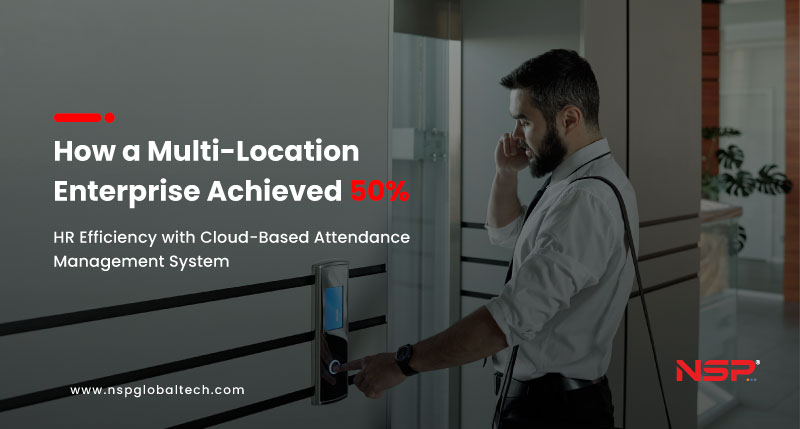
January 29, 2026
How a Multi-Location Enterprise Achieved 50% HR Efficiency with Cloud-Based Attendance Management System
Executive Summary Multi-location businesses face unique challenges in tracking attendance and managing...
Read more